Shipwrecks, Reef Trails, and Marine Encounters in South Australian Waters
| Activity | Scuba Diving & Snorkelling |
| Trails Available | 14 dive sites and underwater trails |
| Difficulty Range | Beginner to Advanced |
| Regions | Adelaide & Adelaide Hills, Fleurieu Peninsula, Eyre Peninsula, Limestone Coast |
| Highlights | Ex HMAS Hobart, Port Noarlunga Reef, Ewens Ponds, Cuttlefish Experience, Ships’ Graveyard |
A State of Underwater Discovery
South Australia’s waters offer a diving experience unlike any other in Australia — a combination of maritime heritage, marine ecology, and unique wildlife encounters that takes divers from historic shipwrecks and artificial reefs to crystal-clear freshwater springs and seasonal gatherings of marine giants. With fourteen dedicated dive sites and underwater trails across four regions, the state provides diving for every level of experience and every kind of underwater interest.
The diversity is remarkable. Adelaide’s metropolitan coast and Gulf St Vincent waters shelter artificial reefs, historic wrecks, and purpose-built underwater heritage trails within easy reach of the city. The Fleurieu Peninsula’s waters hold one of Australia’s premier wreck dives — the ex-HMAS Hobart, a 133-metre guided missile destroyer scuttled to create an artificial reef. The Eyre Peninsula hosts a globally unique marine event — the annual winter aggregation of hundreds of thousands of giant Australian cuttlefish. And the Limestone Coast’s Ewens Ponds offer freshwater diving through crystal-clear spring-fed ponds with visibility of up to fifty metres.
Adelaide & Gulf St Vincent
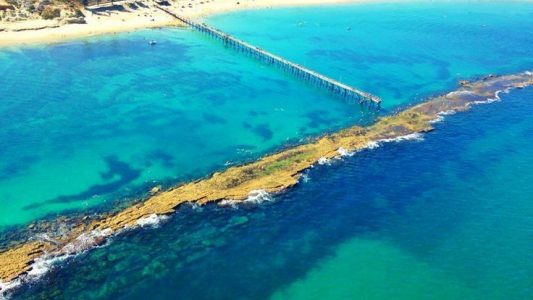
Adelaide’s metropolitan waters offer surprisingly diverse diving within easy reach of the city. The Port Noarlunga Reef dive trail is one of South Australia’s most popular dive sites, with a guided underwater trail along a protected reef system. The Garden Island Ships’ Graveyard provides maritime heritage diving through the wrecks of vessels deliberately sunk as breakwaters. Artificial reef sites off Glenelg and Grange have developed into productive marine habitats, while historic wrecks like the Claris and John Robb offer wreck diving experiences.
• Port Noarlunga Reef Dive Trail — Guided underwater trail on a protected reef
• Garden Island Ships’ Graveyard — Maritime heritage dive trail
• Adelaide’s Underwater Heritage Trail — Heritage maritime dive experience
• Broken Bottom Dive Site — Coastal reef diving
• Claris Dive Site — Historic wreck diving
• Glenelg Barge Dive Site — Artificial reef at Glenelg
• Glenelg Tyre Reef Dive Site — Artificial reef marine habitat
• Grange Tyre Reef Dive Site — Artificial reef diving
• John Robb Dive Site — Historic wreck dive
• Leather Jacket Alley Dive Site — Marine life diving
Fleurieu Peninsula — The Ex HMAS Hobart and Aldinga Reef
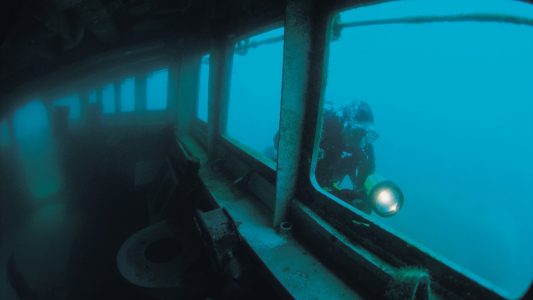
The Fleurieu Peninsula’s waters hold some of the most dramatic diving in the state. The ex-HMAS Hobart — a Perth-class guided missile destroyer scuttled in 2002 off Yankalilla Bay — is now one of Australia’s top wreck dives. The 133-metre warship sits upright on the seabed, encrusted with marine life and home to schools of fish that use the vessel’s superstructure as habitat. The Aldinga reef system provides equally compelling diving, with a dramatic drop-off wall and underwater pinnacle formations close to shore.
• Ex HMAS Hobart Dive Site — 133-metre warship wreck — one of Australia’s best dives
• Aldinga Drop Off Dive Site — Dramatic reef wall diving
• Aldinga Pinnacles Dive Site — Underwater pinnacle formations
Eyre Peninsula — Giant Cuttlefish
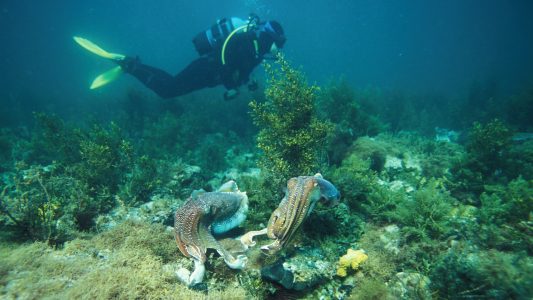
Every winter between May and August, the waters off Whyalla’s Stony Point become the stage for one of the ocean’s most extraordinary events. Hundreds of thousands of giant Australian cuttlefish — the world’s largest cuttlefish species — gather in the shallow rocky reef to mate and spawn. This aggregation is unique globally, occurring nowhere else on Earth at this scale. Divers and snorkellers can enter the water and find themselves surrounded by these mesmerising creatures, which display constantly shifting patterns of colour and texture.
• Cuttlefish Dive Experience — Whyalla — World’s largest cuttlefish aggregation
Limestone Coast — Ewens Ponds
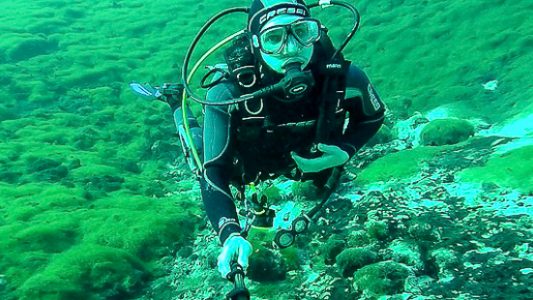
Ewens Ponds Conservation Park, near Mount Gambier, offers one of the most unique freshwater diving experiences in Australia. Three spring-fed ponds of crystal-clear water rise through the limestone, creating underwater environments with visibility of up to fifty metres through submerged gardens of aquatic plants. Floating through these pristine ponds feels like diving in liquid glass — a completely different experience from ocean diving, and one that is found almost nowhere else.
• Ewens Ponds — Crystal-clear freshwater diving through limestone springs
Safety and Qualifications
All diving in South Australia requires appropriate qualifications and equipment. Open water certification is the minimum requirement for most sites, with advanced certification recommended for deeper wreck dives like the ex-HMAS Hobart. Some sites require specific permits — check with local dive operators and the Department for Environment and Water before diving. Professional dive operators throughout the state offer guided dives, equipment hire, and certification courses. Divers must never disturb or remove artefacts from historic wreck sites, which are protected under maritime heritage legislation.
South Australia’s dive sites offer experiences found nowhere else — a 133-metre warship colonised by marine life, crystal-clear limestone springs with fifty-metre visibility, a globally unique gathering of giant cuttlefish, and a maritime heritage that stretches back to the earliest days of European seafaring. Whether you are a wreck diver, a marine naturalist, or a freshwater explorer, the state’s underwater trails lead to discoveries that will stay with you long after you surface.