Whyalla – Eyre Peninsula
| Location | Black Point and Stony Point, Whyalla |
| Access | Shore dive from Black Point or Stony Point |
| Depth | 1–6 metres |
| Difficulty | Easy (snorkelling or diving) |
| Activity | Scuba Diving / Snorkelling |
| Region | Eyre Peninsula |
| Accommodation | Camping, mid-range and premium options — See accommodation options |
| Season | May to August annually |
| Water Temperature | 12–15°C (June to August) |
The Greatest Cuttlefish Gathering on Earth
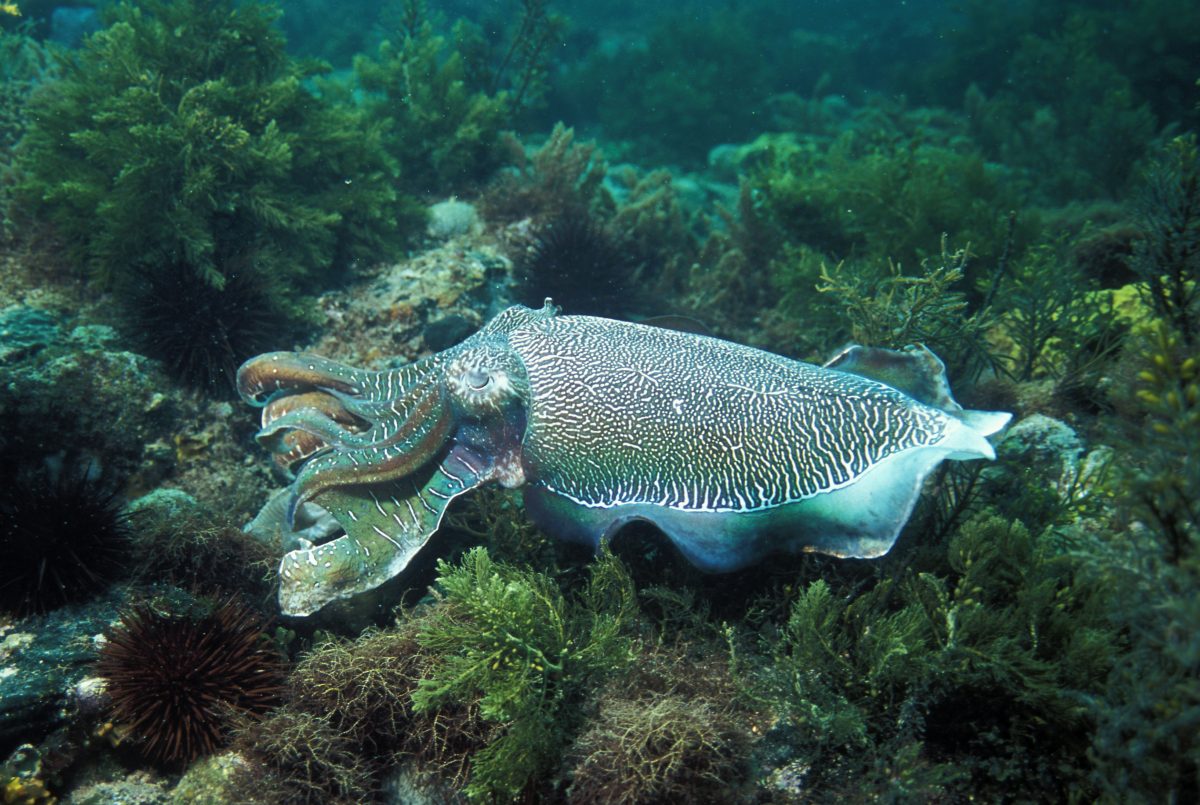
Every year between May and August, something extraordinary happens on the rocky coastline just north of Whyalla on the upper Spencer Gulf. Tens of thousands of Australian Giant Cuttlefish — the world’s largest cuttlefish species, growing up to half a metre in length — converge on a few hundred metres of shallow reef for their annual mating and spawning ritual. It is the greatest mass gathering of this remarkable animal found anywhere on the planet, and it transforms these cold, shallow waters into one of the most spectacular underwater experiences in Australia.
The cuttlefish aggregation at Whyalla has drawn international attention from scientists, filmmakers, and divers, establishing itself as a world-class natural phenomenon that attracts thousands of visitors each season. What makes the experience particularly accessible is its shallow depth — the cuttlefish congregate in water as shallow as one to six metres, making the spectacle available to snorkellers as well as scuba divers. You do not need to be an experienced diver to witness one of nature’s great performances.
The Experience
Entering the Water
The primary access points are Black Point and Stony Point, both located on the coast north of Whyalla. At Black Point, a wooden staircase leads down to the rocky shoreline, providing relatively easy access to the water. At the Santos western boundary fence, a 60-metre pathway of recycled materials leads over the rocks to the high water mark. The entry over rocky terrain requires care, and booties or reef shoes are essential to protect your feet.
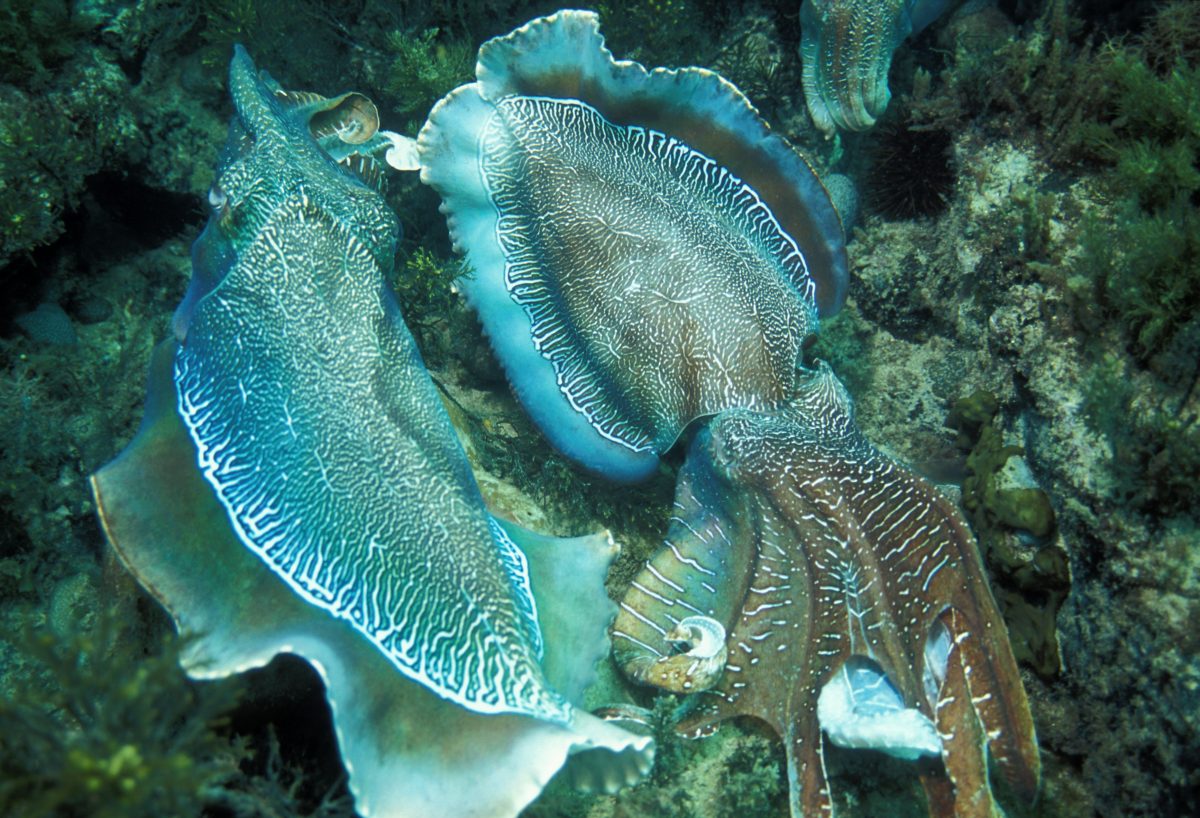
Once in the water, the experience is immediately immersive. Giant cuttlefish are not shy animals — they are curious, intelligent, and remarkably tolerant of human observers. Within minutes of entering, you are likely to find yourself face-to-face with one of these extraordinary creatures, its skin rippling with waves of colour as it communicates with potential mates or signals to rivals. The colours are mesmerising — from deep purple and electric blue to shimmering gold and pulsing white, the cuttlefish’s chromatophores produce a light show that no technology can replicate.
The Mating Ritual
The aggregation is driven by the primal urge to reproduce. Large males display elaborate colour patterns to attract females, their skin pulsing with hypnotic waves of iridescence. Smaller males employ a different strategy — they disguise themselves as females to sneak past the larger males and mate without confrontation. This deceptive behaviour, which scientists call ‘sneaker’ mating, is one of the most fascinating examples of sexual selection strategy in the animal kingdom, and watching it unfold at arm’s length is an unforgettable experience.
Females lay their eggs in crevices among the rocks, depositing white, lemon-shaped capsules that they carefully wedge into protected spaces. This spawning represents the end of the cuttlefish’s life cycle — these animals live for only one to two years, and the adults die shortly after breeding. The combination of vibrant life and impending death gives the aggregation a bittersweet quality that many divers find deeply moving.
Conservation and Science
The Whyalla cuttlefish aggregation has been the subject of intensive scientific study for decades. Research conducted here has contributed significantly to our understanding of cephalopod behaviour, intelligence, and reproductive ecology. The population experienced a worrying decline in the early 2010s, prompting a ban on cuttlefish fishing in the area and intensified monitoring. Since then, numbers have recovered strongly, with recent seasons recording some of the largest aggregations in years — a conservation success story that demonstrates what happens when communities and governments act to protect a natural phenomenon.

Planning Your Visit
The cuttlefish season runs from May to August, with peak numbers typically occurring in June and July. Water temperatures during this period range from 12 to 15 degrees Celsius, so a wetsuit of at least 5mm is essential — 7mm is preferable for extended snorkelling sessions. There are no toilet or shower facilities at Black Point or Stony Point, though these are available closer to the lighthouse. Several Whyalla-based operators offer guided cuttlefish snorkelling and diving tours with equipment hire, providing an ideal option for visitors without their own gear.
Whyalla is approximately 385 kilometres northwest of Adelaide, making the cuttlefish experience a comfortable weekend trip. The town offers a full range of accommodation, from caravan parks to motels. The annual Whyalla Cuttlefish Festival celebrates the aggregation with events, guided snorkels, and educational activities. Important: access to the Santos side of the fence at the western boundary is prohibited. Always enter from designated access points.
The Cuttlefish Dive Experience at Whyalla is one of those rare encounters that changes how you see the ocean. Floating in cold, shallow water while thousands of giant cuttlefish pulse with impossible colours around you is a privilege that exists nowhere else on Earth. It is a reminder that some of the planet’s most extraordinary natural spectacles require nothing more than a wetsuit, a mask, and the willingness to get in.
Where to Stay
Planning an overnight trip? See our Fleurieu Peninsula Accommodation Guide for the best places to stay near this trail.