Caves, Coastlines, and Volcanic Lakes in South Australia’s Southeast
| Region | Limestone Coast |
| Trails Available | 25 trails |
| Activities | Walking, Scuba Diving |
| Key Areas | Naracoorte Caves, Canunda, Bool Lagoon, Coorong, Padthaway, Little Dip, Mount Gambier |
| Distance from Adelaide | 3–5 hours southeast |
| Accommodation | Camping, mid-range and premium options — See accommodation options |
A Region Shaped by Stone, Water, and Time

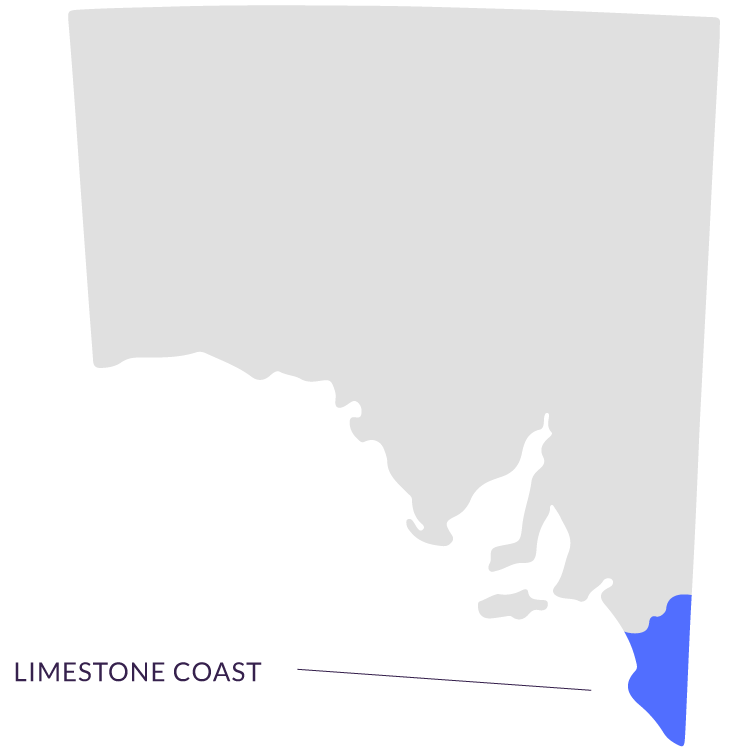
The Limestone Coast stretches from the vast wetland system of the Coorong in the northwest to the volcanic crater lakes of Mount Gambier in the southeast, encompassing some of South Australia’s most diverse and geologically fascinating landscapes. The region takes its name from the ancient limestone that underlies the entire area — a porous, cave-riddled foundation that has created an extraordinary hidden world beneath the surface. At Naracoorte Caves National Park, this limestone preserves a World Heritage fossil record spanning half a million years. At Ewens Ponds, crystal-clear spring water rises through the limestone to create one of the most remarkable freshwater diving experiences in Australia.
Above ground, the Limestone Coast unfolds as a long sweep of pristine beaches, dramatic headlands, and coastal national parks, punctuated by the picturesque towns of Robe, Beachport, Kingston SE, and Port MacDonnell. Inland, the region supports wine production — particularly Coonawarra’s famous terra rossa soils — and pastoral farming across gentle limestone ridges and volcanic plains. The wetlands of Bool Lagoon provide critical habitat for waterbirds, while the Coorong’s vast coastal lagoon is one of Australia’s most significant wetland environments. The walking trails throughout the region explore all of these landscapes, from coastal cliff tops to cave-country forests to wetland boardwalks.
Naracoorte Caves National Park
Naracoorte Caves National Park is one of only two World Heritage fossil sites in Australia — the caves contain deposits of megafauna fossils spanning over 500,000 years, providing an unparalleled record of Australia’s ancient animal life. The walking trails around the caves take you through the native woodland above the cave systems, past sinkholes and collapsed chambers, and to lookout points that reveal the scale of the limestone landscape beneath your feet. The combination of geological significance, fossil heritage, and surface walking creates a trail experience unlike anything else in the state.
• World Heritage Hike – Naracoorte Caves — Walk above Australia’s World Heritage fossil caves
• Stoney Point Hike – Naracoorte Caves — Extended walk through the cave country landscape
• Limestone Cliffs Hike — Along the limestone formations above the caves
Canunda National Park
Canunda National Park stretches along 40 kilometres of dramatic Southern Ocean coastline south of Millicent, protecting towering limestone cliffs, wild beaches, and a hinterland of coastal scrub and wetlands. The park’s walking trails provide some of the most spectacular coastal walking in the Limestone Coast region, with cliff-top paths overlooking crashing seas and long beach walks below ancient limestone formations.
• Willichum Lookout Hike — Canunda — Cliff-top views of the Southern Ocean coastline
• Cape Buffon Walk — Canunda — Dramatic headland walking
• Seaview Hike — Canunda — Extended coastal trail with ocean panoramas
Wetlands and Conservation Walks

The Limestone Coast’s inland walks explore wetlands, native forests, and conservation reserves that protect significant habitats. Bool Lagoon Game Reserve supports vast colonies of waterbirds, accessible via boardwalks that extend over the water. The Padthaway Conservation Park trails wind through native bush on the limestone ridges, while Telford Scrub and Penambol Conservation Parks protect rare remnants of the stringybark and native forest that once covered the region.
• Tea-Tree Boardwalk – Bool Lagoon — Boardwalk through wetland bird habitat
• Gunawar Walk – Bool Lagoon — Wetland walk with waterbird viewing
• Wombat Walk – Penambol Conservation Park — Through habitat favoured by wombats
• Butterfly Walk – Penambol — Conservation park walk through native woodland
• Stringybark Forest Walking Trail – Telford Scrub — Through rare remnant stringybark forest
• Stringybark Forest Walking Trail — Telford Scrub — Old-growth forest walking
• Forest Canopy Walking Trail — Telford Scrub — Beneath the forest canopy
• Banksia Loop — Padthaway — Loop through banksia woodland
• Currawong Loop — Padthaway — Birdlife-rich woodland walk
• Gwen Ellis Walking Trail — Mount Monster — Heritage conservation walk
Coastal Walks and Lakes
Beyond Canunda, the Limestone Coast’s walking trails explore coastal lakes, heritage sites, and remote beach landscapes. The area around Little Dip Conservation Park offers freshwater lake walks, while the Coorong trails — shared with the Fleurieu Peninsula region — provide access to one of Australia’s most significant coastal wetland systems.
• Fresh Water Lake Walk — Little Dip — Lakeside walking through coastal conservation
• Big Dip Lake to Eliza Lake Hike — Lake-to-lake hiking through coastal bush
• Butcher Gap Walk — Coastal walking near Robe
• Coola Outstation Historical Hike — Heritage walk through pastoral history
• Jack Point Pelican Observatory Walk — Coorong — Pelican colony viewing
Diving
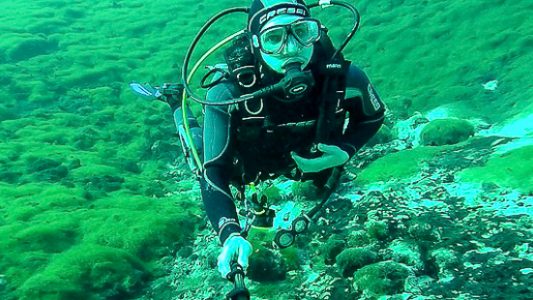
The Limestone Coast’s underwater world is as remarkable as its surface landscapes. Ewens Ponds — three spring-fed ponds of crystal-clear water rising through the limestone — offers one of the most unique freshwater diving experiences in Australia, with visibility of up to fifty metres through submerged gardens of aquatic plants.
• Ewens Ponds — Crystal-clear freshwater diving through limestone springs
The Limestone Coast is a region where the ground beneath your feet holds as many stories as the landscape above — World Heritage fossil caves, spring-fed ponds of impossible clarity, and a coastline where limestone cliffs face the Southern Ocean. Its trails span wetland boardwalks and cliff-top panoramas, rare forest remnants and volcanic lake edges, creating a walking region that reveals its treasures slowly and rewards those who explore beyond the obvious.