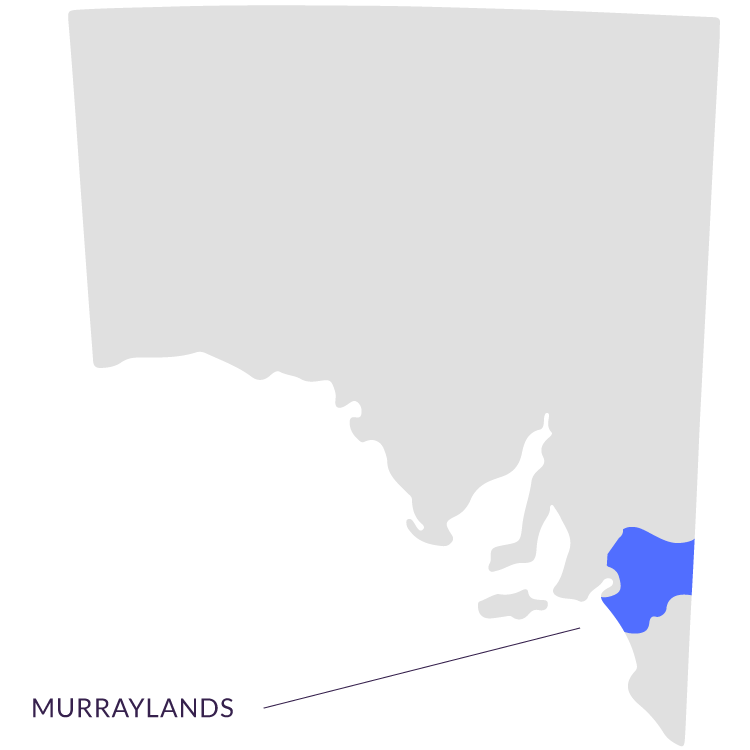
Follow our greatest river and discover delicious food and wine, historic townships and pristine conservation parks
Linked by a common proximity to water; whether river, lake or ocean, these diverse regions showcase some of South Australia’s iconic landscapes – stretching from Renmark, in the state’s north, to Lake Alexandrina, Lake Albert and the world-renowned Coorong National Park in the south.
Flowing 2520 kilometres from the Australian Alps to the ocean, the Murray River, Australia’s greatest waterway, has long been a favourite holiday destination for families, water sport enthusiasts and nature lovers. Renting a houseboat, available in many shapes and sizes, remains one of the signature experiences on the river.
From the Riverland, the Murray River flows gently southwest to the Lakes and Coorong, passing through some of Australia’s most productive farms, orchards and vineyards. The river is flanked by picturesque river ports, including Swan Reach, Mannum and Goolwa, and also provides access to several national parks and important Aboriginal sites.
Within easy driving of Adelaide, the Murray River makes the ideal backdrop for all kinds of adventure – from paddle steamer cruises to kayaking expeditions, hiking and cycling trips, birdwatching and, of course, fishing for the mighty Murray Callop. Thanks to an abundance of fresh produce, the Murray River and Riverland are both popular destinations for foodies – citrus and stone fruit, olives, honey, dates, almonds and yabbies are just some of the taste sensations available.
Wine tasting is another popular activity. Grape growing is a time honoured tradition in the Riverland and along the Murray River. Alongside many well-established names, such as Angove Family Winemakers, Berri Estates and Banrock Station, visitors will find several smaller, family-owned cellar doors offering tastings and vineyard lunches. Beer is also making an impact with craft brewers now operating at Murtho, Goolwa and Langhorne Creek.
History buffs will enjoy exploring historic little towns like Peake, Pinnaroo, Tungkillo, Wellington and Callington which have changed little in over a century. Old Tailem Town, Australia’s biggest pioneer village and Monarto Zoo are particular favourites with the kids.
Those who want to explore the great outdoors will find an impressive array of places to visit. Major attractions include Australia’s first Biosphere Reserve, the Morgan Conservation Park (famous for its untouched lagoons, swamps and creek systems), the ochre-coloured cliffs of Ngaut Ngaut Conservation Park and the Coorong National Park, now recognised as a wetland of international significance.
From the dramatic cliffs along the Murray River to the vineyards and orchards of the Riverland and the wetlands and sand dunes of the Coorong, it’s hard to imagine anywhere as beautiful and awe-inspiring than this beautiful multifaceted corner of Australia.