A Barossa Ranges Bushwalk Through Rock Formations, Lookouts, and Stringybark Forest
| Activity | Walking (Intermediate – Grade 3) |
| Distance | 4.7 kilometres one way (approx. 7 km return) |
| Duration | Approximately 2 to 2.5 hours |
| Region | Barossa |
| Accommodation | Camping, mid-range and premium options — See accommodation options |
| Start Point | Wallowa Track, Flaxman Valley SA 5235 (Gate 1 off Tanunda Creek Road) |
| End Point | Granite Track, Flaxman Valley SA 5235 |
| Park Entry | Free |
| Dogs Allowed | No |
Overview
While most visitors to the Barossa Valley come for the wine, the Wallowa Hike offers a reminder that this famous wine region sits against a backdrop of rugged natural beauty. Kaiserstuhl Conservation Park occupies 390 hectares of the Barossa Ranges, just 12 kilometres south-east of the township of Tanunda, and the Wallowa Hike is its signature trail — a moderately challenging walk that winds through creeks, rocky outcrops, areas of low forest, scrub, and open grassland, delivering panoramic views across the ranges to the vineyard-quilted valley floor below.
The park was established primarily to protect the northernmost population of brown stringybark trees in South Australia, and it shelters an impressive diversity of around 400 plant species within its relatively compact boundaries. The Wallowa Hike passes through the heart of this botanical richness, climbing from the valley floor through changing vegetation communities to elevated lookouts where the full scale of the Barossa landscape reveals itself.
The Walk
From Gate 1 to Horse Head Rock
The trail begins at Gate 1, off Tanunda Creek Road, where a small car park marks the entrance to the park. The initial section follows Wallowa Track through open woodland along the creek, where river red gums shade the path and the birdlife is immediately apparent. Honeyeaters work the flowering shrubs, tree-creepers spiral up rough bark, and Adelaide Rosellas flash red and blue through the canopy overhead.
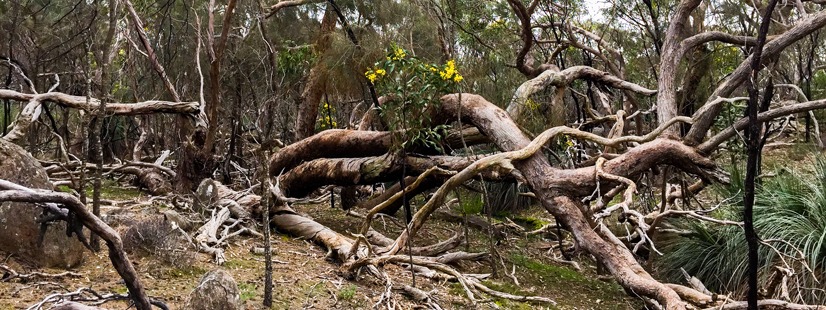
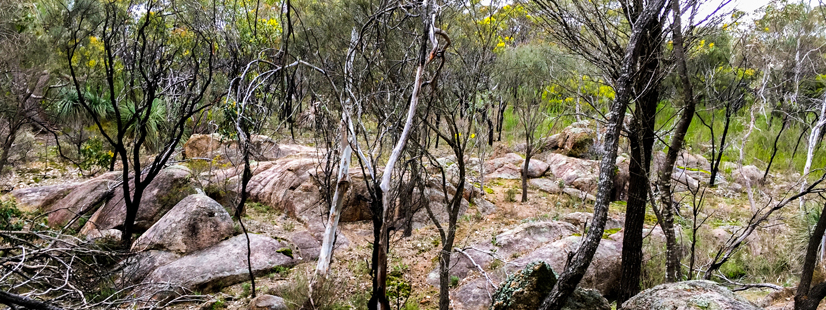
As the trail climbs away from the creek, it enters denser stringybark forest and begins to encounter the park’s distinctive rock formations. Horse Head Rock is a highlight — a weathered granite outcrop that has been sculpted by millennia of wind and rain into a shape that unmistakably resembles a horse’s head in profile. Further along, Capped Rock presents another geological curiosity: a horizontal slab of rock balanced improbably on a vertical outcrop, like a table set by nature.
The Lookout and Heysen Trail Connection
The trail connects with the famous Heysen Trail, South Australia’s premier long-distance walking route. A side-trip at Gate PV1 leads to a lookout that offers sweeping views across Pewsey Vale and the wider Kaiserstuhl landscape. On a clear day, the patchwork of vineyards, the gentle folds of the ranges, and the distant blue haze of the Adelaide Plains create a panorama that perfectly captures the beauty of the Barossa region.
The walk back follows a different route through the park, passing through open grassland where western grey kangaroos are commonly seen grazing in the early morning and late afternoon. The changing vegetation communities along the trail — from creekside red gums to hilltop stringybark to open grass — make this a walk of constant variety.
Flora and Wildlife
Kaiserstuhl is a botanist’s paradise. The park’s 400 plant species include the rare brown stringybark eucalyptus, several species of native orchid (best seen in spring), and a rich understorey of grasses, ferns, and wildflowers. In September and October, the park comes alive with colour as the spring wildflowers bloom.
Birdwatchers will find the park equally rewarding. Over 100 bird species have been recorded here, including blue wrens, various parrot species, honeyeaters, finches, and thornbills. Western grey kangaroos are the most commonly seen mammal, along with echidnas and a variety of small reptiles that bask on the rocky outcrops along the trail.
Planning Your Visit
Kaiserstuhl Conservation Park is located 12 kilometres south-east of Tanunda, accessible via Tanunda Creek Road. The park is free to enter and open year-round, though it closes on days of Catastrophic Fire Danger. There are no facilities within the park, so bring water, snacks, and sun protection. The best time to walk is between April and November, when temperatures are mild and the wildflowers and orchids are in season. The trail is well-marked but includes some moderate inclines and uneven surfaces, so sturdy footwear is essential.
The Wallowa Hike is the Barossa at its wildest. While the vineyards and cellar doors draw the crowds, this trail reveals the ancient ranges that frame the valley — a landscape of weathered granite, stringybark forest, and panoramic views that offer a completely different perspective on one of Australia’s most celebrated wine regions.
Where to Stay
Planning an overnight trip? See our Barossa Valley Accommodation Guide for the best places to stay near this trail.