Ikara-Flinders Ranges National Park
| Location | Ikara-Flinders Ranges National Park |
| Start Point | Bunyeroo Car Park, 18 km north of Wilpena |
| End Point | Bunyeroo Car Park (return) |
| Distance | 7.5 km return |
| Time | Approximately 3.5 hours |
| Difficulty | Intermediate |
| Activity | Walking / Hiking |
| Region | Flinders Ranges & Outback |
| Accommodation | Bush camping, mid-range and premium options — See accommodation options |
Walking Through 500 Million Years of History
The Bunyeroo Gorge is one of the Flinders Ranges’ quieter treasures — a wide, peaceful gorge lined with majestic river red gums and framed by rugged rock formations that display some of the oldest and most scientifically significant geology in Australia. This 7.5-kilometre return trail follows the course of Bunyeroo Creek through a landscape where every rock face tells a story measured not in centuries but in hundreds of millions of years, and where the practical history of 19th-century bullock teams shares the valley with the deep time of continental formation.
Located within Ikara-Flinders Ranges National Park, approximately 450 kilometres north of Adelaide, the Bunyeroo Gorge Hike begins 18 kilometres north of Wilpena along the Bunyeroo Gorge Road. The gorge is less famous than Wilpena Pound or Brachina Gorge, which works in its favour — the relative quietness means wildlife is less wary, the sense of solitude is genuine, and the experience feels more like a personal discovery than a tourist attraction.
The Trail Experience
Into the Gorge
The trail is best described as a wander rather than a formal hike. Much of the route follows the broad, rocky creek bed of Bunyeroo Creek, where hikers pick their way over water-smoothed stones and sandy stretches between the towering red gums that define the gorge’s character. These ancient trees — some with trunks several metres in circumference — have the smooth, cream-coloured bark and spreading canopy that make river red gums one of the most beautiful of all Australian trees. Their presence along the creek line signals underground water, even when the surface flow has ceased.
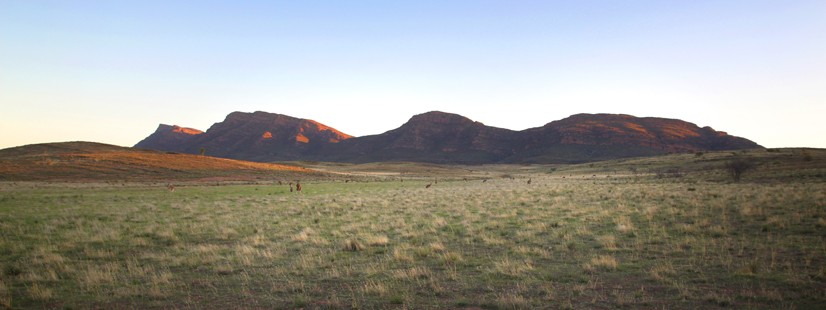
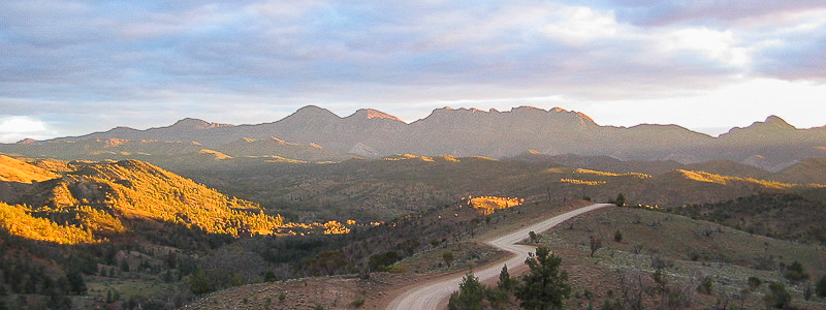
The rock walls that frame the gorge rise on both sides in layers of rust, ochre, and cream — sedimentary formations laid down in ancient seabeds and subsequently tilted, folded, and eroded into the dramatic shapes visible today. Informative geological signage along the trail explains what you are seeing, transforming the walk into an outdoor geology lesson that illuminates the deep history of the Australian continent.
Historic Corridor
In the 19th century, this gorge served a very practical purpose. Bullock teams and horse-drawn coaches used the relatively flat creek bed as a route to access the western plains, transporting copper ore from the mines, mail from distant settlements, and produce from the stations. Walking the same route today, you can appreciate why the teamsters chose it — the gorge provides a natural corridor through terrain that would otherwise be extremely difficult to traverse with heavy wagons.
Wildlife and Natural Heritage
Bunyeroo Gorge provides excellent opportunities for observing the wildlife of the Flinders Ranges in a setting that feels undisturbed. The yellow-footed rock wallaby — one of Australia’s most beautiful and endangered marsupials — has been spotted perched high on the cliff faces above the gorge, though these shy animals require patience and sharp eyes to locate. Euros bound across the rocky slopes with characteristic agility, while wedge-tailed eagles soar in the thermal currents above the gorge.
The river red gums along the creek support a rich community of birds, from the raucous galahs and white cockatoos that fill the canopy with noise and colour to the quieter species — wrens, honeyeaters, and thornbills — that forage in the understory. Feral goats are also sometimes visible on the cliff faces, a reminder of the pastoral history that preceded the park’s protection.
Planning Your Hike
The Bunyeroo Gorge Hike begins from the Bunyeroo car park, accessible via Bunyeroo Gorge Road from the main park road. A park pass is required for Ikara-Flinders Ranges National Park and can be purchased at the Wilpena Pound Visitor Centre. While the walking is not technically difficult, the rocky creek bed requires sturdy footwear with good grip — hiking boots are strongly recommended. The gorge can be hot in summer, and swarming flies are common in warmer months; a head net is a worthwhile addition to your pack.
The best months for walking are March through October, when temperatures are moderate and the autumn and winter light creates stunning effects on the ochre rock walls. After heavy rain, Bunyeroo Creek can flow with significant force — check conditions before heading out. The trail is suitable for families with older children but is not pram-accessible. Dogs are not permitted.
The Bunyeroo Gorge Hike offers something that many more famous Flinders Ranges walks cannot — genuine solitude in a landscape of extraordinary geological beauty. Walking the ancient creek bed between towering red gums and sculptured rock walls, you trace a route that has been used by humans and animals for thousands of years, through country that was ancient before the first life appeared on land. It is a walk that puts human time in perspective, and rewards every step.
Where to Stay
Planning an overnight trip? See our Flinders Ranges Accommodation Guide for the best places to stay near this trail.