Adelaide’s Northern Suburbs
| Location | City of Salisbury, northern Adelaide |
| Start Point | Down Drive, Valley View |
| End Point | Globe Derby (connects to Little Para River Trail) |
| Distance | 14 km |
| Time | 5 hours walking / 3 hours cycling |
| Difficulty | Easy |
| Activity | Walking / Cycling |
| Region | Adelaide & Adelaide Hills |
| Accommodation | Camping, mid-range and premium options — See accommodation options |
| Surface | Sealed shared-use path |
Following the Creek Through Salisbury
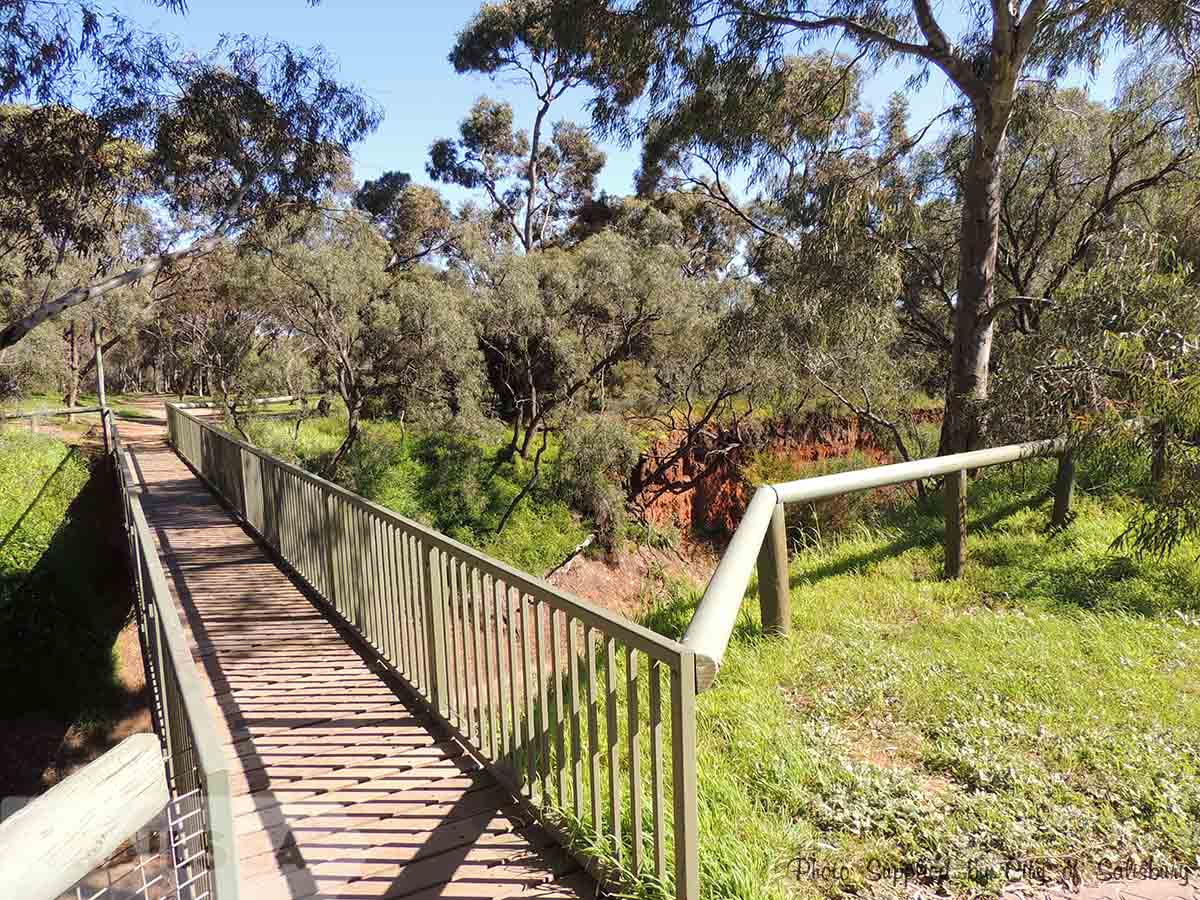
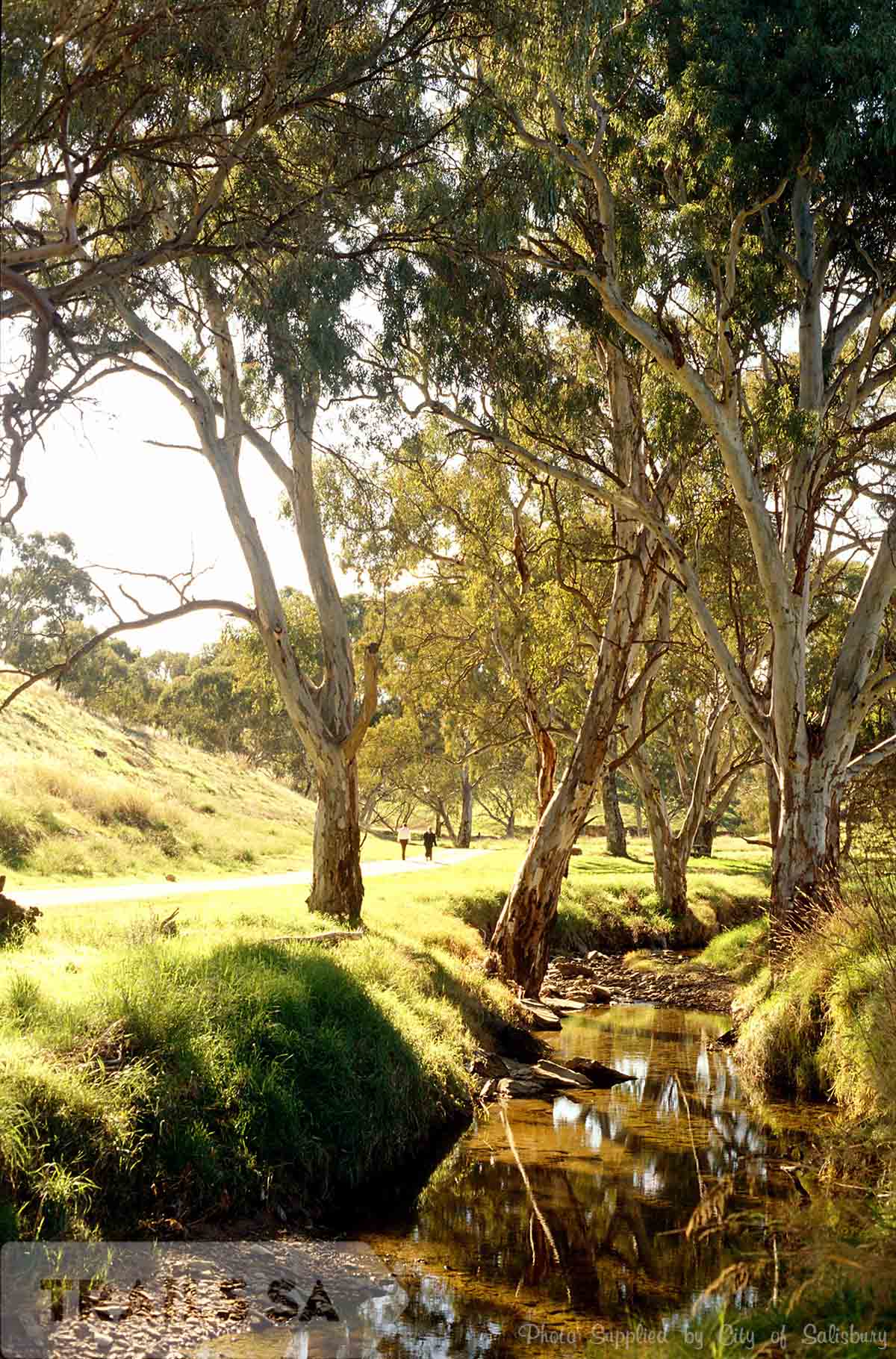
The Dry Creek Trail is one of Adelaide’s longest linear trails — a 14-kilometre sealed path that follows the course of Dry Creek through the City of Salisbury, from Valley View in the south to Globe Derby in the northwest. It is a trail of quiet pleasures: suburban wetlands, mature tree-lined corridors, open parklands, and the company of waterbirds that have made the creek system their home. For the communities it connects, it is much more than a recreation trail — it is a green corridor through suburbia, a commuter route, and a daily escape into the gentle rhythms of creek-side walking and cycling.
The trail passes through Walkley Heights, Pooraka, and Mawson Lakes before reaching the coastal wetlands at Globe Derby. Along the way, it intersects with some of Adelaide’s most innovative urban water management projects, including The Watershed wetlands at Mawson Lakes — a landscape-scale example of water-sensitive urban design that doubles as a beautiful recreational space.
The Route
Valley View to Mawson Lakes
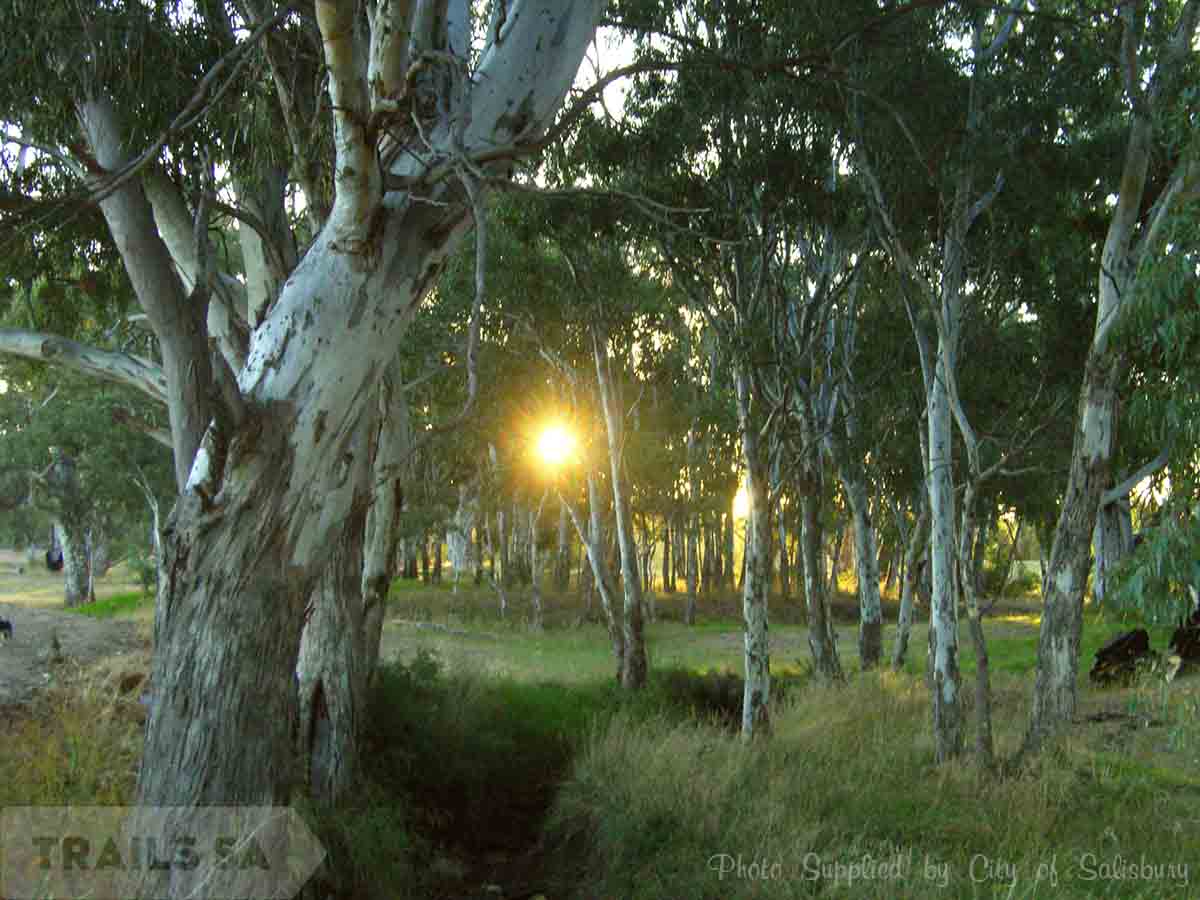
Starting from Down Drive in Valley View, the trail enters a green corridor that follows Dry Creek through suburban Walkley Heights and Pooraka. The path is sealed and shared between walkers and cyclists, with a width that accommodates both comfortably. The creek corridor is lined with mature trees that provide shade in summer and habitat for birds year-round — magpies, lorikeets, and the occasional sacred kingfisher can be spotted along the waterway.
At Mawson Lakes, the trail passes through or near The Watershed — a world-leading stormwater harvesting and treatment facility that transforms urban runoff into usable water while creating wetland habitat of genuine ecological value. The wetlands are particularly impressive for birdwatching, with waterbirds, waders, and reed-dwelling species all present.
Mawson Lakes to Globe Derby
Beyond Mawson Lakes, the trail continues northwest through increasingly open country toward Globe Derby, where the coastal influence becomes apparent in the vegetation and the salt-tinged air. The trail crosses several roads — Briens Road, Main North Road, and Port Wakefield Road — and the railway line at Mawson Lakes. There is a short on-road section at Pratt Avenue in Pooraka. A new cycling and pedestrian underpass at Port Wakefield Road has improved safety and connectivity on this section. At Globe Derby, the trail connects to the Little Para River Trail, extending the network further north.
Access Points
The trail has multiple access points for those wanting to walk or ride shorter sections. Greenfields and The Watershed on Salisbury Highway at Mawson Lakes provide access via a dirt track north of the car park, though this entrance is only open during Watershed operating hours of 8 AM to 4 PM. Mobara Park on Garden Terrace at Mawson Lakes offers 24-hour access. Stockade Park on Hoods Road at Northfield provides another entry point, open from 6 AM to 6 PM.
Planning Your Journey
The Dry Creek Trail is free, accessible year-round, and suitable for walkers, cyclists, and joggers. The sealed surface accommodates road bikes, hybrid bikes, wheelchairs, and prams. Note that the Globe Derby section may be affected by tides, as the creek approaches the coast. The trail is well-connected to Adelaide’s broader cycling network, making it possible to combine it with the Little Para River Trail for an extended ride north, or to use it as a commuter route between Salisbury suburbs and the Mawson Lakes transport interchange.
The Dry Creek Trail is Adelaide’s quiet workhorse — a 14-kilometre green corridor that serves as recreation path, commuter route, and ecological link through the northern suburbs. It may not command the dramatic views of the hills trails or the coastal grandeur of the Coast Park Path, but for the communities it connects and the daily pleasures it provides, it is one of the most valuable trails in the metropolitan network.
Where to Stay
Planning an overnight trip? See our Adelaide Hills Accommodation Guide for the best places to stay near this trail.